
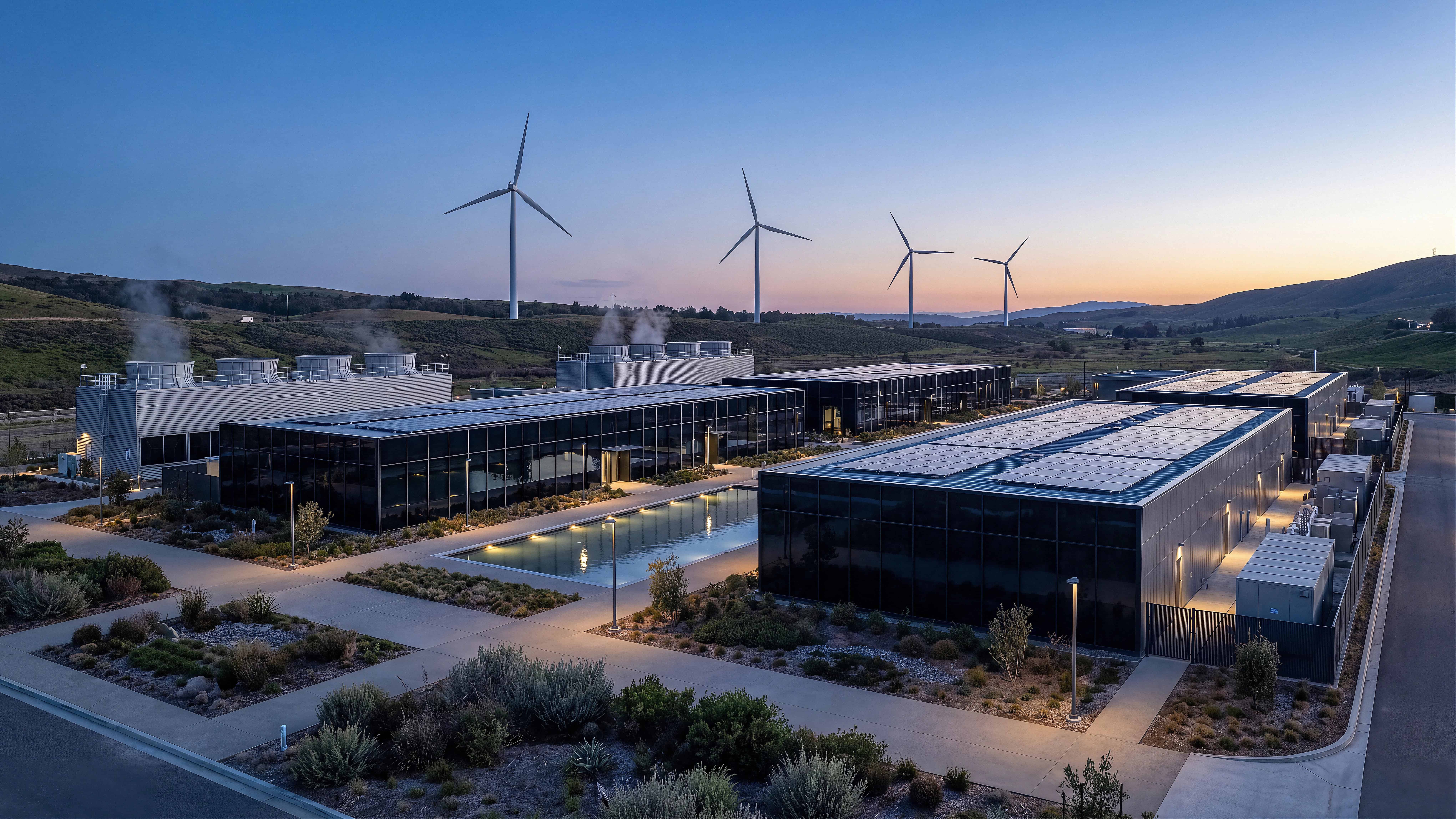
Artificial intelligence is reshaping industries across the globe, and the infrastructure powering that transformation is rapidly expanding beyond traditional technology hubs. Kansas City is emerging as a key player in this movement, reflecting broader growth in AI computing capacity across the United States.
While much of the conversation around AI focuses on chatbots, automation, and machine learning applications, none of these innovations can exist without the massive computing resources that support them. Today, Kansas City is becoming home to those resources.
Kansas City Is Becoming an AI Infrastructure Hub
The latest sign of Kansas City’s growing importance in the technology sector is Lambda’s planned AI Factory. The company announced plans to transform an existing facility in Kansas City into a dedicated AI computing center that is expected to launch with 24 megawatts of capacity and more than 10,000 NVIDIA Blackwell Ultra GPUs, with future expansion potential exceeding 100 megawatts. [lambda.ai]
This type of infrastructure is specifically designed to support the increasingly complex demands of AI model training and inference. As organizations continue adopting AI across business functions, facilities like these provide the resources necessary for large-scale AI training, inference, and cloud-based workloads. [ded.mo.gov]
Kansas City is also seeing growth from companies focused on AI colocation and high-performance computing. Patmos recently expanded its downtown Kansas City AI campus, increasing the site’s capacity to support GPU-heavy workloads and advanced computing environments. The project also demonstrates how existing commercial buildings can be repurposed to support modern computing infrastructure. [datacenter…wledge.com]
The Broader Technology Ecosystem Is Growing
In addition to AI-specific developments, Kansas City continues attracting investments from some of the world’s largest technology companies.
Meta’s Kansas City data center became operational in 2025 following a reported investment exceeding $1 billion. The company has indicated that it’s building toward a new generation of AI-optimized data centers as demand for AI workloads continues to grow. [about.fb.com]
These investments reinforce what many regional business leaders already recognize: Kansas City offers strategic advantages including available land, strong utility infrastructure, access to skilled talent, and a central geographic location. Those factors are making the area increasingly attractive for large-scale technology projects.
Why Businesses Should Pay Attention
For most organizations, AI data centers may seem far removed from daily operations. However, the growth of AI infrastructure in Kansas City signals that there will be a broader shift in how businesses will operate over the next decade.
Companies across industries are exploring how AI can help them:
- Improve operational efficiency
- Automate repetitive tasks
- Strengthen customer experiences
- Generate deeper business insights
- Enhance decision-making capabilities
- Accelerate innovation
As more AI infrastructure is built in the region, access to advanced computing resources becomes increasingly available to organizations of all sizes, not just global technology companies.
The result is a growing opportunity for Midwest businesses to adopt technologies that were once accessible only to the largest enterprises.
Pros and Cons of Kansas City AI Data Centers
As AI-related data center projects continue to expand in Kansas City, they bring both potential benefits and challenges for businesses, communities, and local infrastructure. Understanding both sides of the discussion can help provide context around the region’s growing role in AI and digital infrastructure.
Potential Benefits
Economic Investment
Large-scale data center projects often involve significant capital investment in land, construction, equipment, and supporting infrastructure. These projects can contribute to local economic activity during both the construction and operational phases.
Job Creation
While modern data centers are highly automated, they still require skilled workers for construction, facility management, networking, cybersecurity, electrical systems, and maintenance. Growth in technology infrastructure can also create demand for related professional services and technology talent.
Technology Ecosystem Growth
The presence of advanced computing infrastructure may help attract technology companies, startups, research organizations, and service providers to the region. Over time, this can contribute to the development of a larger technology ecosystem.
Support for AI and Cloud Services
AI data centers provide the computing resources needed for AI model training, inference, cloud computing, and high-performance workloads. As demand for AI services increases, additional infrastructure helps support these applications.
Geographic Diversification of Infrastructure
Historically, much of the nation’s technology infrastructure has been concentrated in a handful of markets. Investments in regions such as Kansas City help diversify where computing resources are located, potentially improving resilience and reducing dependence on a limited number of locations.
Potential Challenges
Energy Consumption
AI data centers require substantial amounts of electricity to power servers and cooling systems. As more facilities come online, utilities and local governments may need to evaluate how increasing power demands align with existing infrastructure and long-term energy planning. [energy.gov]
Water Usage and Cooling Requirements
Many data centers rely on water-based cooling systems to maintain equipment temperatures. Depending on facility design and local conditions, water consumption can become a topic of discussion among community stakeholders and environmental groups. [eesi.org]
Infrastructure Demands
Large facilities may require upgrades to electrical systems, fiber networks, roads, and other supporting infrastructure. These improvements can create long-term benefits but may also require significant planning and investment.
Limited Direct Employment Compared to Manufacturing
Although data centers create jobs, they generally employ fewer long-term workers than similarly sized manufacturing or distribution facilities. [programs.com]
Community and Land Use Considerations
As with many large development projects, residents and local leaders may have questions regarding land use, environmental impact, noise, traffic, and the overall role of data centers within the community.
The Real Power is in the People
Despite the headlines surrounding billion-dollar investments and massive GPU deployments, technology itself is only part of the equation.
The success of AI initiatives often comes down to having the right people, processes, and expertise.
Many organizations are still asking critical questions:
- How do we implement AI responsibly?
- Which business problems should AI solve first?
- How do we integrate AI into existing systems?
- What skills do our teams need?
- How do we govern and secure AI-driven solutions?
As Kansas City’s technology ecosystem expands, demand for skilled IT professionals, data experts, cloud architects, software developers, and AI specialists will continue to increase. Businesses that can access the right talent will be best positioned to capitalize on the opportunities AI presents.
Looking Ahead
The recent growth in AI-related data center projects highlights Kansas City’s increasing role in digital infrastructure development. It’s a signal that the Midwest is becoming an increasingly important contributor to the future of artificial intelligence.
As investments continue flowing into the region, businesses will benefit from improved access to technology, stronger innovation ecosystems, and growing pools of specialized talent. The organizations that thrive in this environment will be those that move beyond simply observing AI trends and begin building practical strategies to leverage them.
The infrastructure is arriving. The opportunity is growing.
Now is the time for businesses to ensure they have the talent, expertise, and technology strategy needed to take advantage of Kansas City’s emergence as an AI hub.